
AMERICAN MANUFACTURING PROJECT · PROSPECTIVE CONCEPT CASE STUDY
Wallasch Welding Cobots
Exploring automated welding for tubular carts, racks, shelving and tables.
WPM is a manufacturability and domestic manufacturing company. This anonymous concept study explores how repeatable tube-frame subassemblies could be prepared, located and presented to a welding cobot. It does not represent an installed system, a customer engagement or demonstrated production results.
Bike-frame welding and positioning
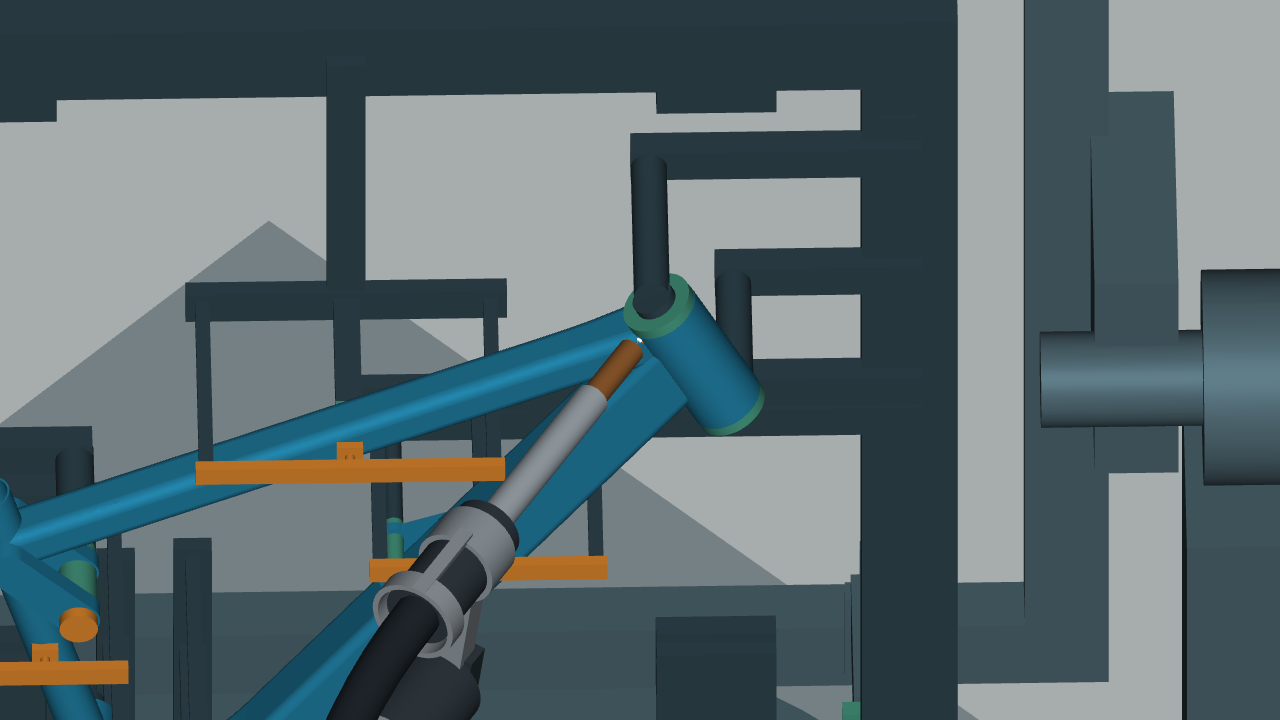
A CAD study explores a proposed welding-cobot setup around the Wallasch front-frame model. An indexed fixture presents different joints to the torch, while a transferable cassette supports handling.
Handling and indexing study
An 83-second condensed sequence begins with a preloaded cassette and returns it to the load nest.
What the expanded sequence includes
- 34 supported cassette-handling phases, including capture and dock latching
- Five proposed tack holds and five short weld travels
- Four indexer moves to reorient the frame
Individual tube loading, workpiece-clamp actuation, complete joint perimeters, frame removal from the cassette and inspection are outside this sequence. Motion timing does not predict production cycle time.
Development study with illustrative timing. The expanded sequence shows fragments at 5 of 15 mapped joint interfaces; a complete frame welding cycle is not shown. Weld quality, fixture capacity, guarding and process safety remain unvalidated.
Explore the two proposed weld segments

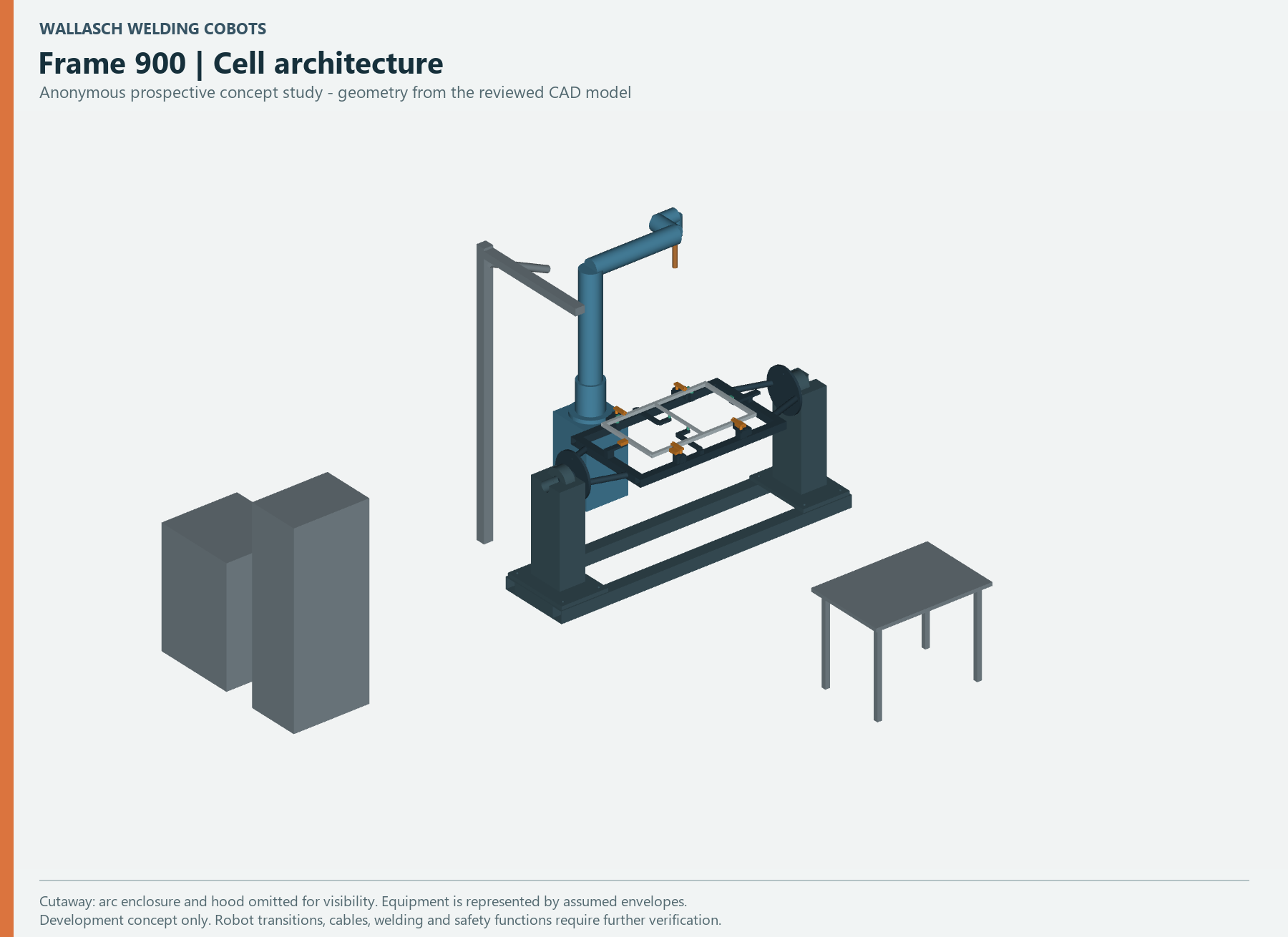
Frame 900 concept architecture, shown as a CAD cutaway. Arc enclosure and hood are omitted for visibility. Generic equipment envelopes are illustrative.
Open full-size CAD viewThe manufacturing question
Small welded frames can contain difficult process details: thin walls, changing joint sizes, limited torch access and distortion after the clamps are released. The study begins with those details and a defined test article.
The first concept: Frame 900
An independently dimensioned 900 × 550 mm open frame provides a starting point for studying cart bases, shelf frames and table subframes. The concept combines positive part location, clamps positioned away from the seams, a rotary carrier supported at both ends, and a guarded welding area with extraction provisions. Loading and unloading would take place in a verified stopped state.
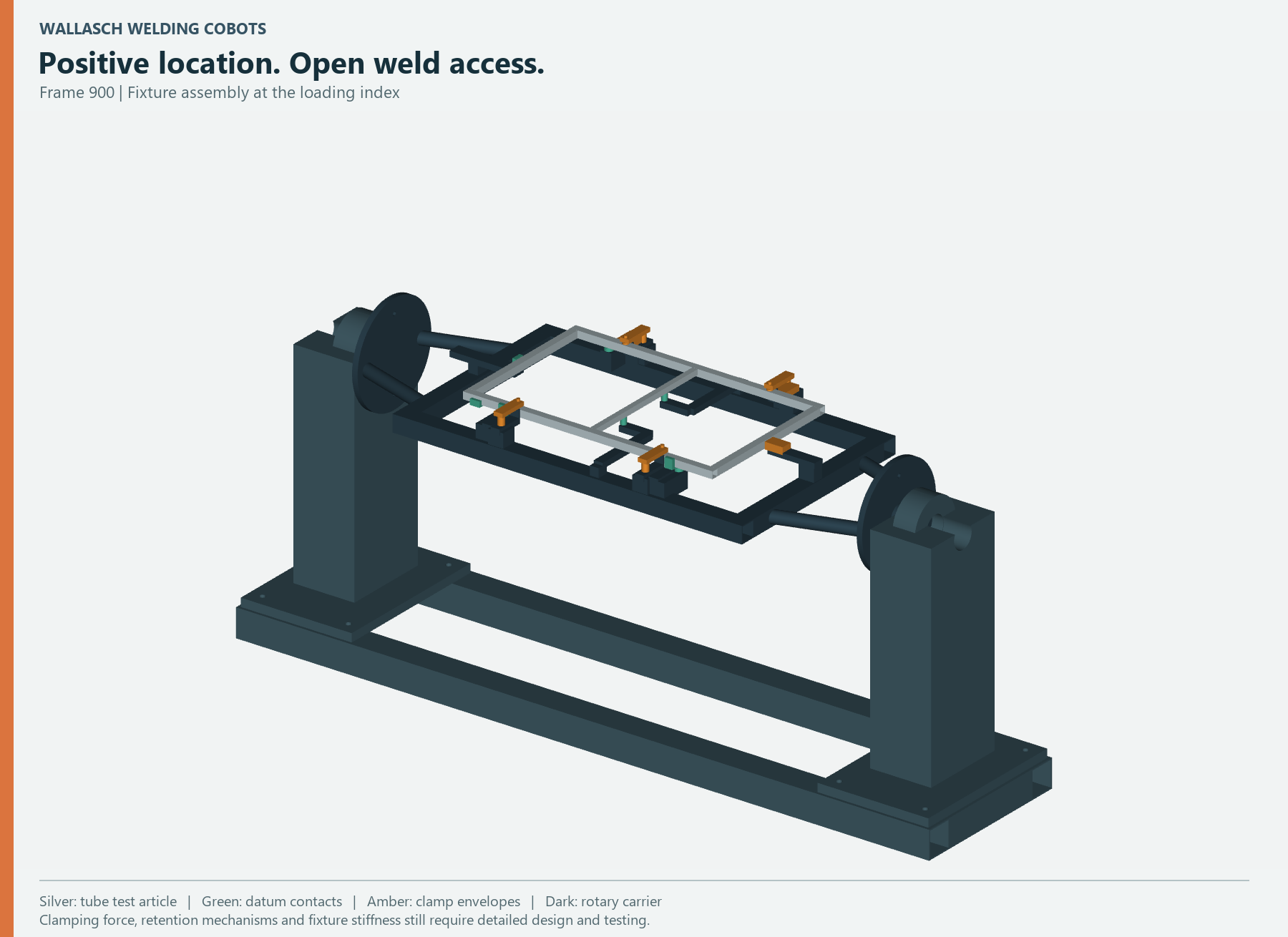
Positive location and open access in the original rotary fixture concept.
Open full-size CAD view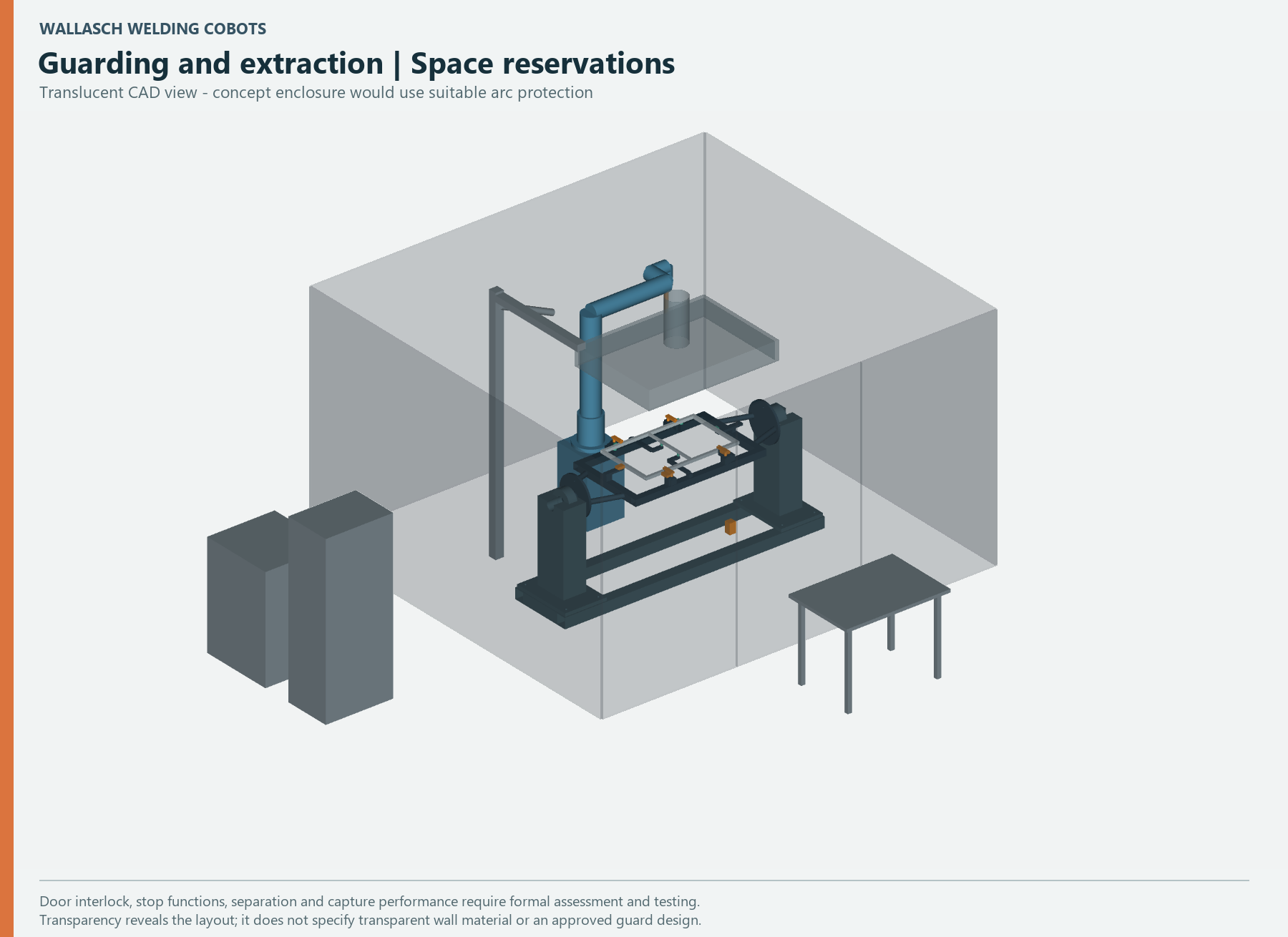
Guarding and extraction space reservations shown transparently for layout review. Guard construction and capture performance remain to be assessed.
Open full-size CAD viewMaterial matters
Thin-wall aluminum requires careful cleaning, feeding and heat control. Steel and stainless would use separate process development, consumables and inspection requirements. A process proven for one material or frame would not automatically qualify another.
What the study produced
The work produced parametric CAD assemblies, a documented design history and geometric access reviews. Those reviews led to changes in clamp placement, cross-member support and the rotary fixture’s end interfaces. The accompanying assembly and indexing views come directly from that CAD geometry.
See the indexing concept
CAD indexing study with the robot at a fixed park pose and the arc off. Guards are omitted to show the mechanism. This is not footage of equipment.
Motion starts only when you choose Play. Stop returns to the static CAD view.
What remains open
Weld trials, complete robot and cable-motion verification, fixture calculations, inspection criteria, extraction testing and a formal safety assessment are required before a production system could be released. The study makes no claims about throughput, savings, weld quality, load capacity or safety certification.
A focused path forward
Frame 900 is the first development scope. Longer rack panels, three-dimensional assemblies and sheet-metal tops would each require their own tooling and process study. Their inclusion in the concept family is not a claim of established capability.