
DESIGN. PROCESS. DOMESTIC POSSIBILITY.
American Manufacturing Project
Exploring practical ways to bring manufacturing back to the U.S.
We study familiar hardware, develop original concepts, and investigate how design and manufacturing choices could support a practical U.S. production path. Manufacturing location and product performance must be established for each project.
Better production starts with the design
Bringing a part into production takes more than a CAD model. The material, number of components, tooling, assembly steps, inspection plan, and supplier capabilities all have to work together.
Our goal is to make those decisions visible: what a concept is trying to improve, how it could be made, and what still needs proof before production.
Design for the job
Start with the function, interfaces, operating conditions, and practical user needs.
Develop the process
Study material and manufacturing routes, assembly requirements, repeatability, and inspection.
Prove the next step
Use reviews, prototypes, and a defined test plan to resolve the remaining questions.
SUBPROJECT · IN DEVELOPMENT
Snap Hardware Development
Original snap hardware concepts exploring simpler stainless-steel construction and a path toward U.S. manufacturing. The first investigation focuses on an integral-flexure, double-ended connection.
Explore Snap Hardware Development →ORIGINAL MACHINE CONCEPTS · IN DEVELOPMENT
Wallasch Die-Cast Machines
Exploring a 400–1,200 U.S. short-ton clamp-force family and a separate small-part four-slide architecture. These are prospective machine-development studies; ratings, operation, and production performance remain unvalidated.
Explore the machine development program →PROSPECTIVE CONCEPT CASE STUDY
Wallasch Welding Cobots
Exploring repeatable tube-frame preparation, fixture access and rotary indexing for carts, racks, shelving and tables. This anonymous development concept is not an installed system or demonstrated production result.
Explore the welding concept study →MANUFACTURING-DEVELOPMENT CONCEPT · NOT FOR SALE
Wallasch CNC Machines
The compact and gantry concepts are designated Light-Duty Auto-Loading Machines. A separate moving-table mill line and pallet auto-loader are in development. Duty, capacity and production performance remain unvalidated.
Explore the CNC concept study →MANUFACTURING-DEVELOPMENT STUDY
Regulator housing development
Three related housing and packaging studies explore circular, tall-cover, and reduced-mouth layouts. Actual CAD views show housing components and associated die, trimming, and machining-fixture concepts. Internal mechanisms and operating interfaces remain unresolved.
No pressure, leakage, flow, material, certification, compliance, or production-readiness claim has been verified. These images communicate manufacturing ideas and require further development and qualification.
Select any image to inspect its full framing and labels.
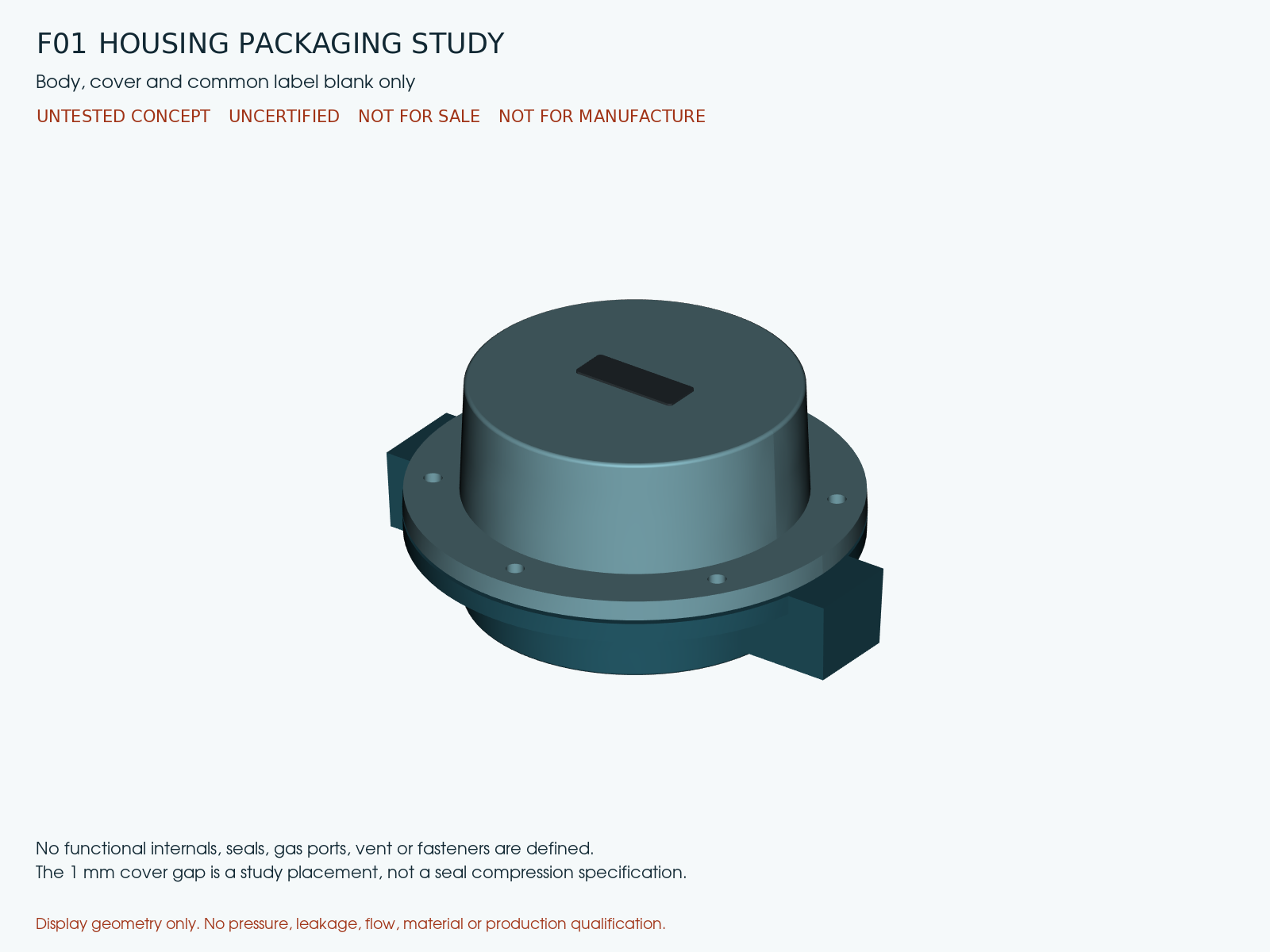
Actual CAD view of the circular housing arrangement. Internal mechanisms and operating interfaces remain unresolved.
Open full-size image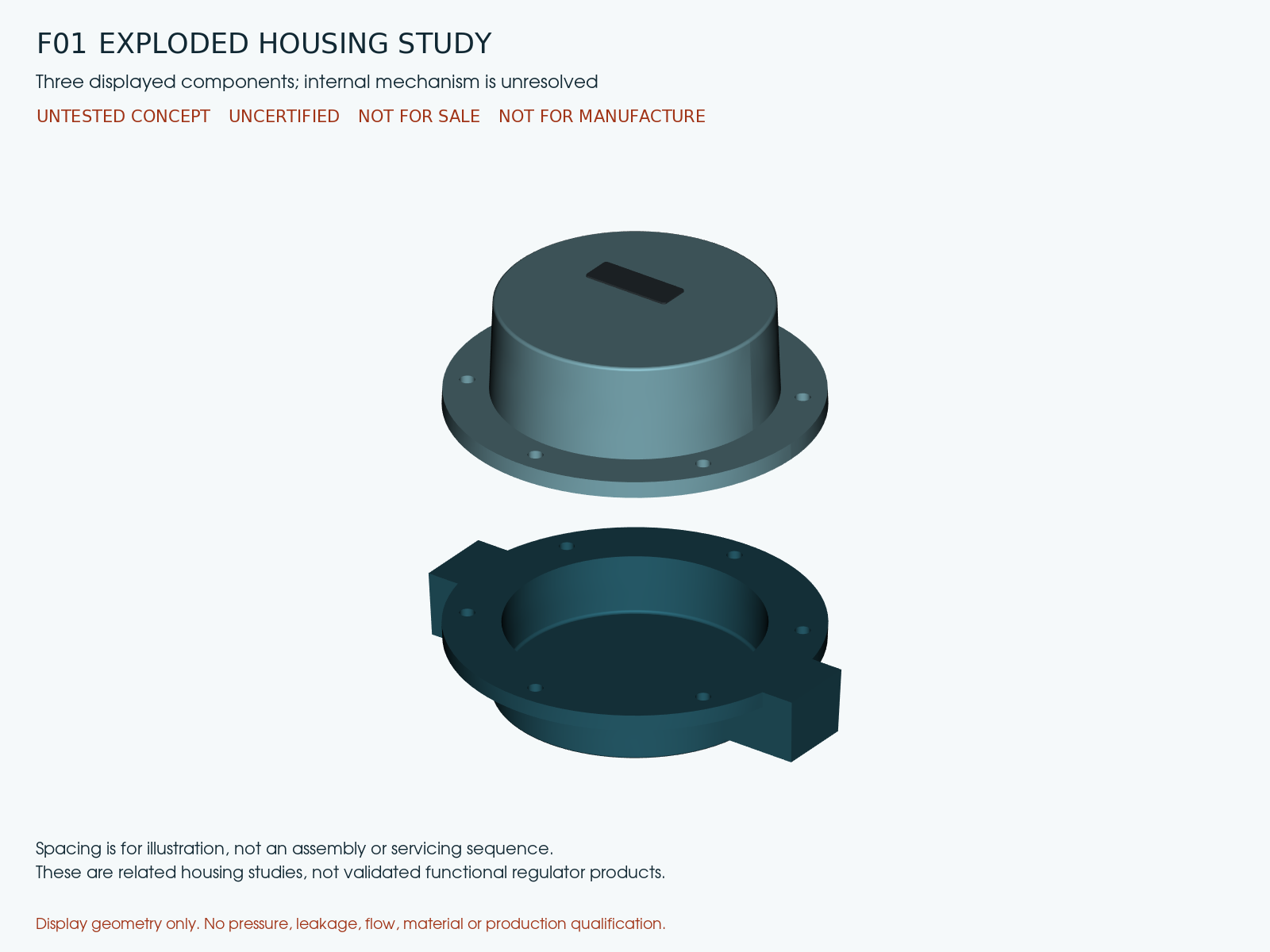
Separated housing components shown for manufacturing discussion; assembly fits and function are unverified.
Open full-size image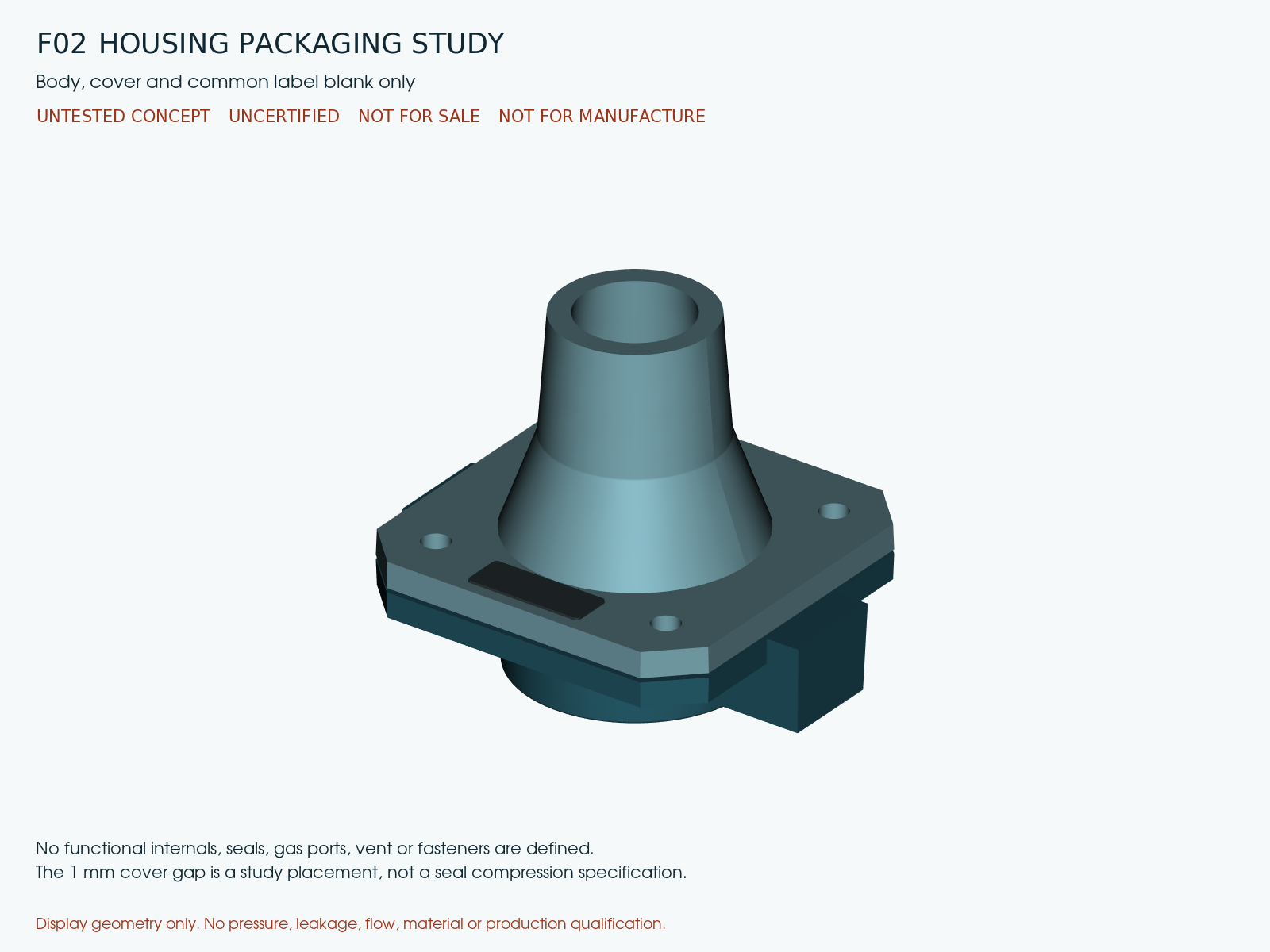
A related tall-cover packaging arrangement. Dimensions and appearance do not establish operating performance.
Open full-size image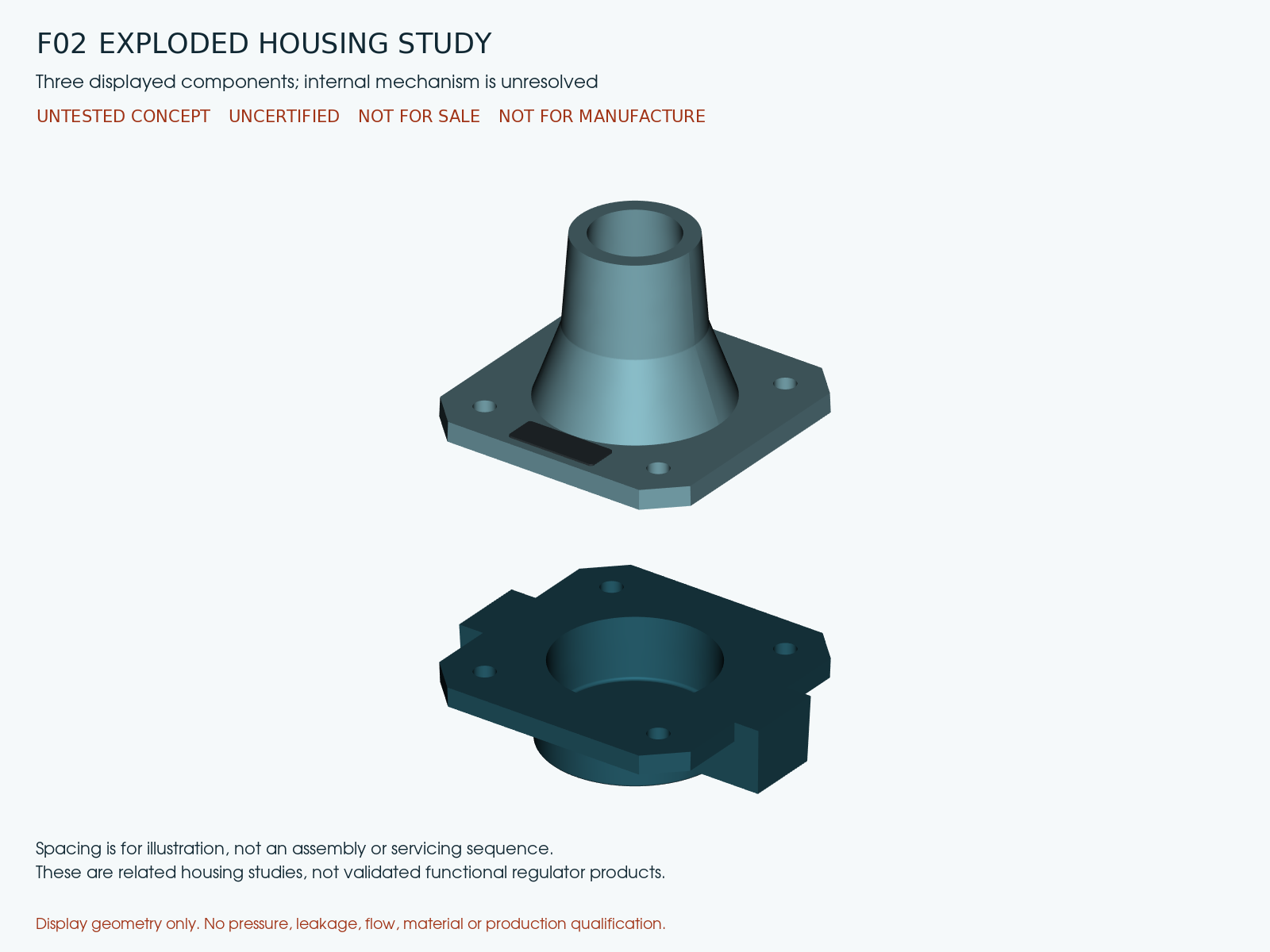
Actual CAD components of the tall-cover study, shown in a separated presentation.
Open full-size image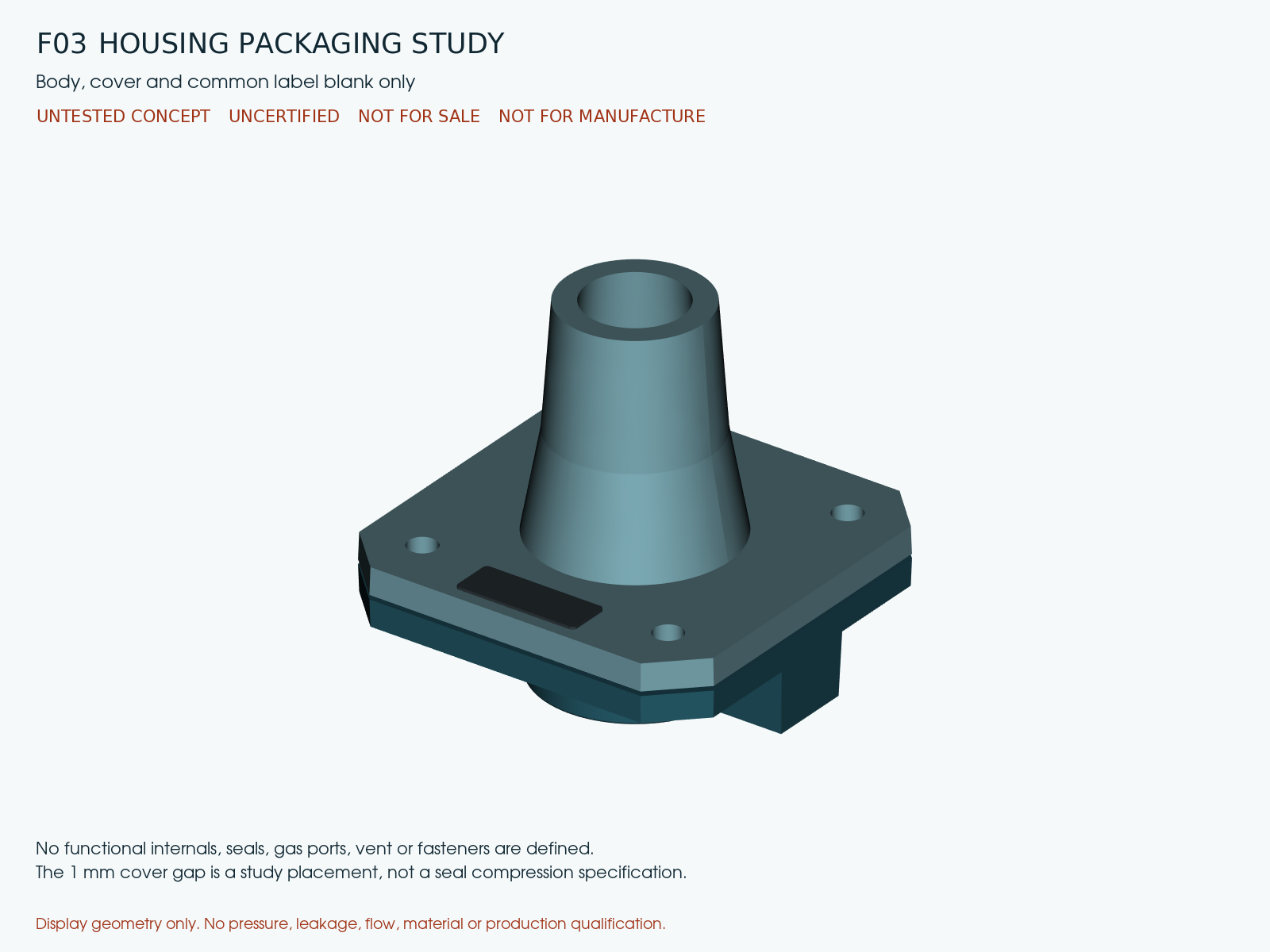
A related reduced-mouth packaging arrangement in the same regulator development family.
Open full-size image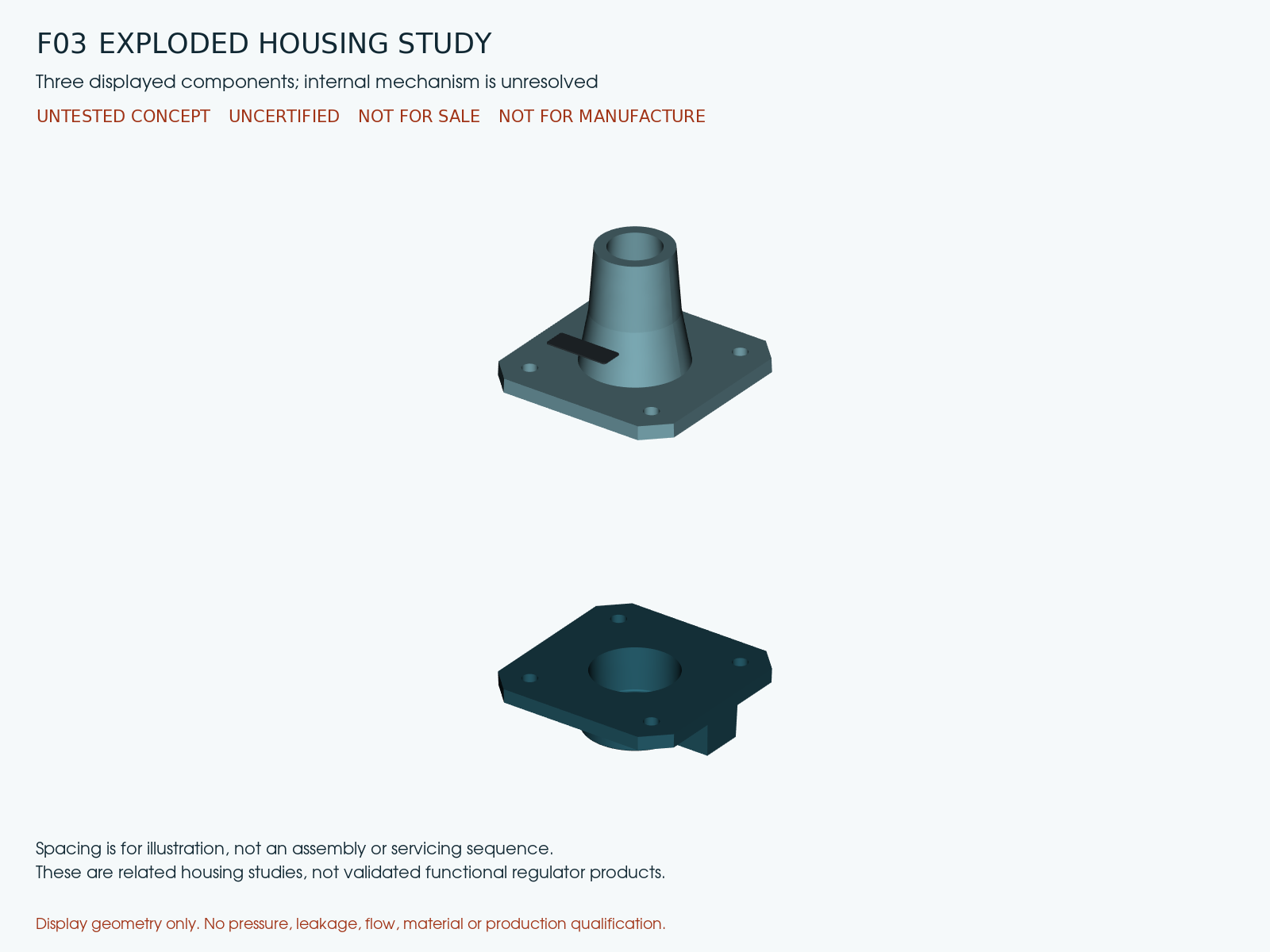
Separated housing components from the reviewed CAD presentation.
Open full-size image
Nominal concept layout; loads, hardware, operating process and machine fit remain unverified.
Open full-size image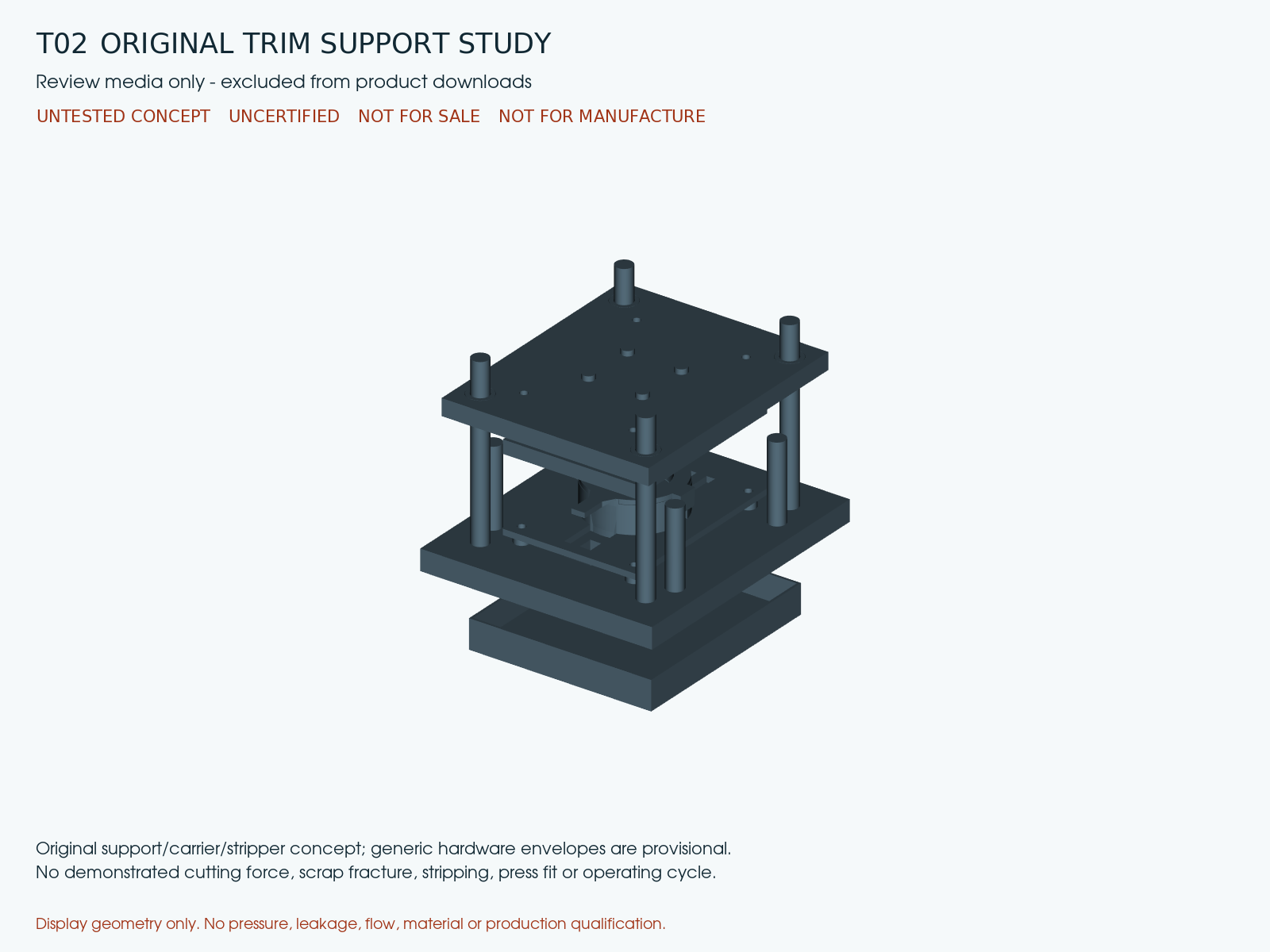
Local shot study only; complete casting-shot compatibility is not established. Nominal concept layout; loads, hardware, operating process and machine fit remain unverified.
Open full-size image
Nominal concept layout; loads, hardware, operating process and machine fit remain unverified.
Open full-size imageProjects are in development. Concepts shown are not released products, and U.S. manufacture is a goal rather than an established origin claim. Customer-confidential work is not shown.
Discuss a manufacturing challenge →