
WPM-P009 · MANUFACTURING-DEVELOPMENT STUDY
Segmented-finger sheet-bending fixture
Removable tooling explores clearance for small folded-sheet boxes with existing side walls. See the nominal mechanism, component relationships and supported-service ideas.
The amber coupon and its bend are prescribed geometry. Physical forming, forces, springback, material qualification, clamp slip, loads, guarding and safe operation remain unvalidated. No rated capacity is established.
See the concept
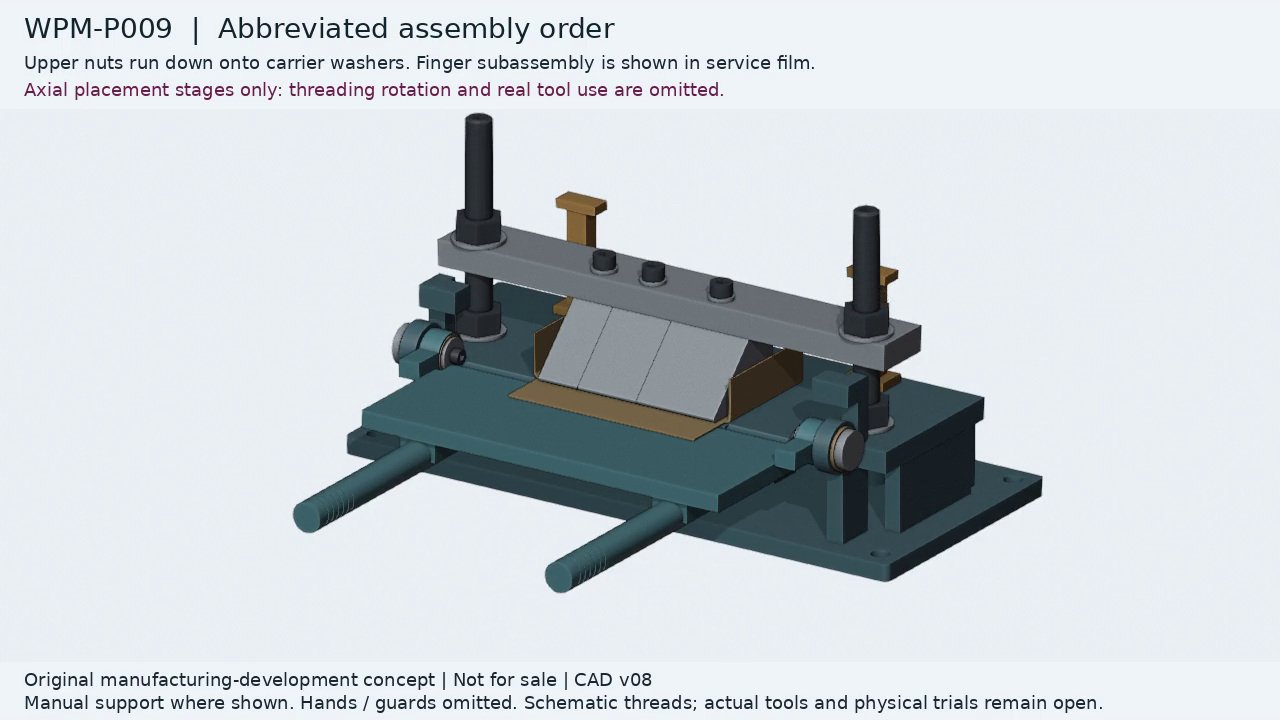
A 30-second overview introduces the fixture and its component relationships. These are manufacturing-development visuals, not proof of a functioning or safe production tool.
Prescribed bending sequence
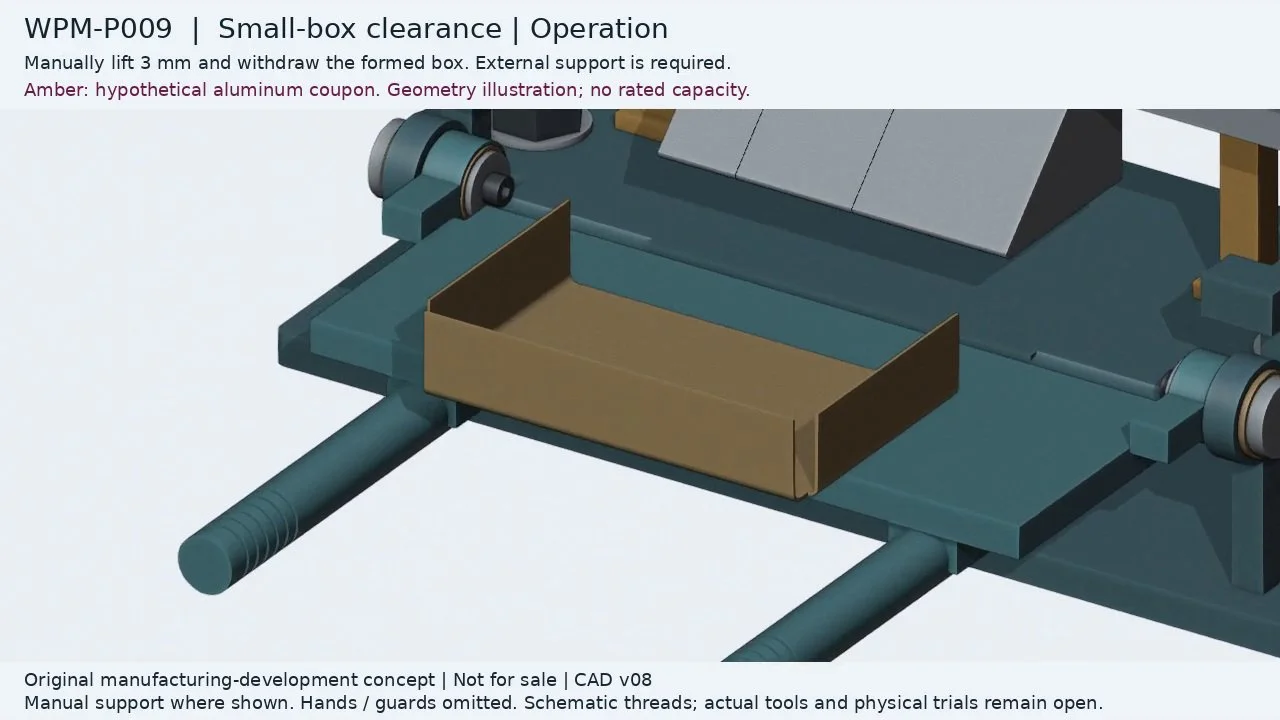
The 38-second operation illustration uses a hypothetical 0.8 mm soft-aluminum coupon. Its constant-thickness bend is constructed geometrically; this is not a stress, strain, contact, force or springback simulation. Manual and external support are required where shown.
Actual CAD section
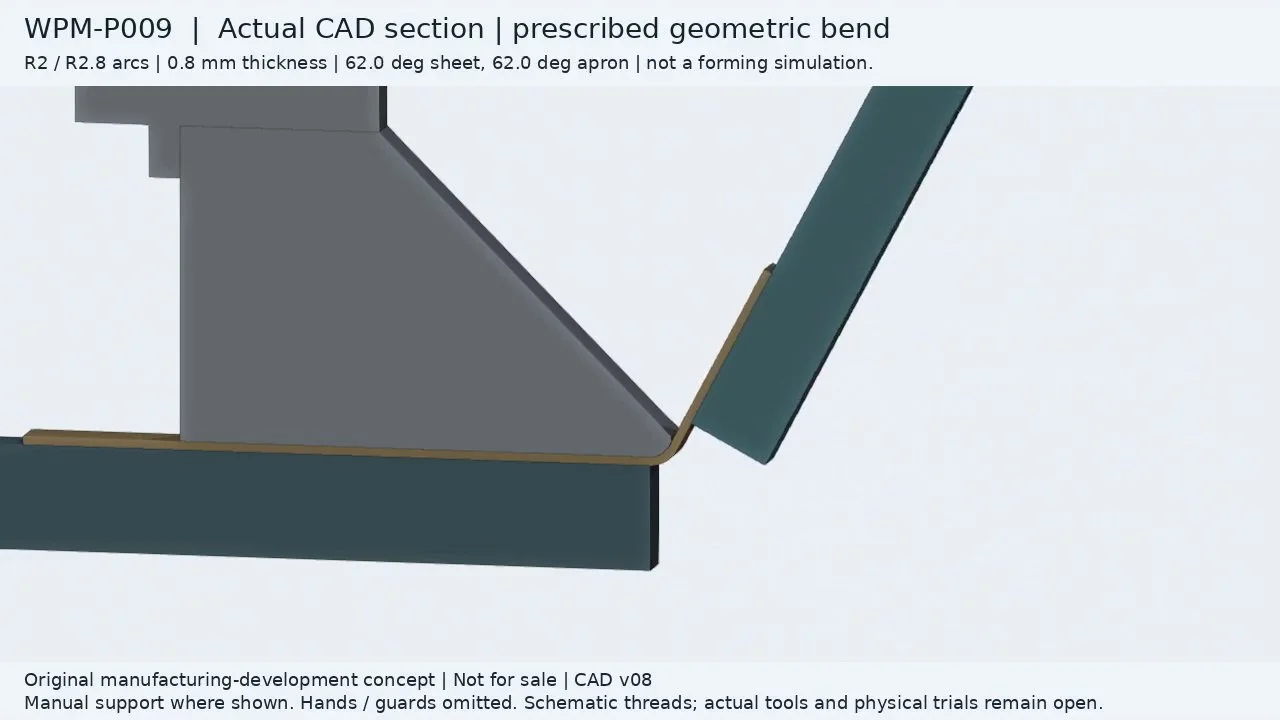
The 16-second section view exposes the prescribed sheet and apron relationship. Geometric travel does not establish material behavior, tooling loads or finished-part accuracy.
Assembly and disassembly
A 24-second abbreviated assembly sequence. Axial placement stages simplify long thread rotations, hands, actual tools and temporary support. Finger-subassembly detail is shown separately in the service film.
A 24-second nominal disassembly sequence. Separated parts need manual or external support. This presentation is not a released build or maintenance instruction.
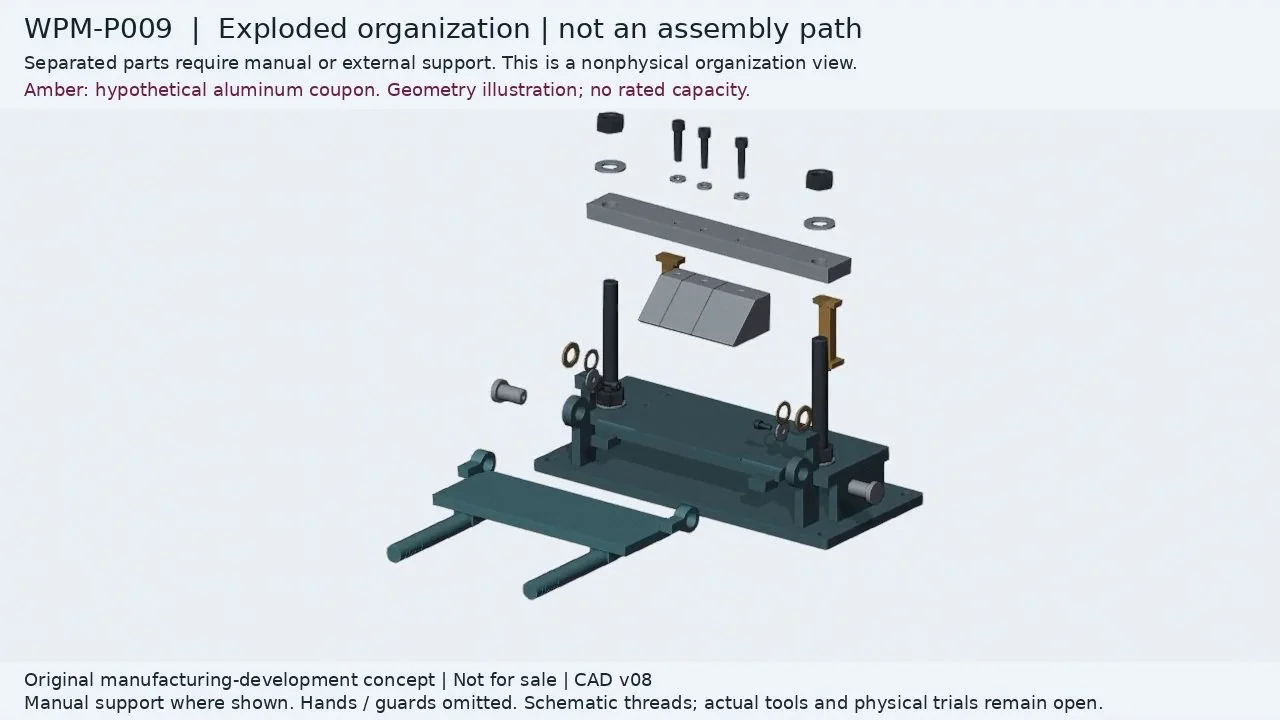
The 12-second exploded film separates component groups for discussion. Handling, access and physical assembly trials remain open.
Supported-service studies
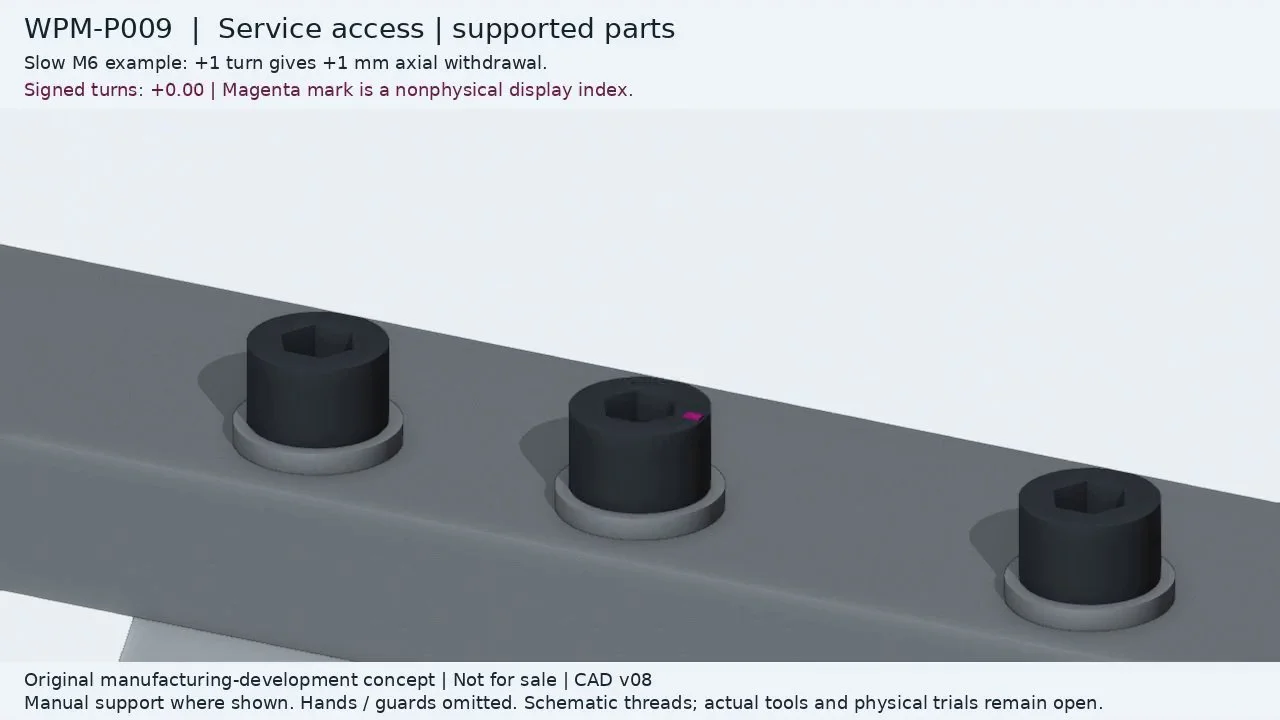
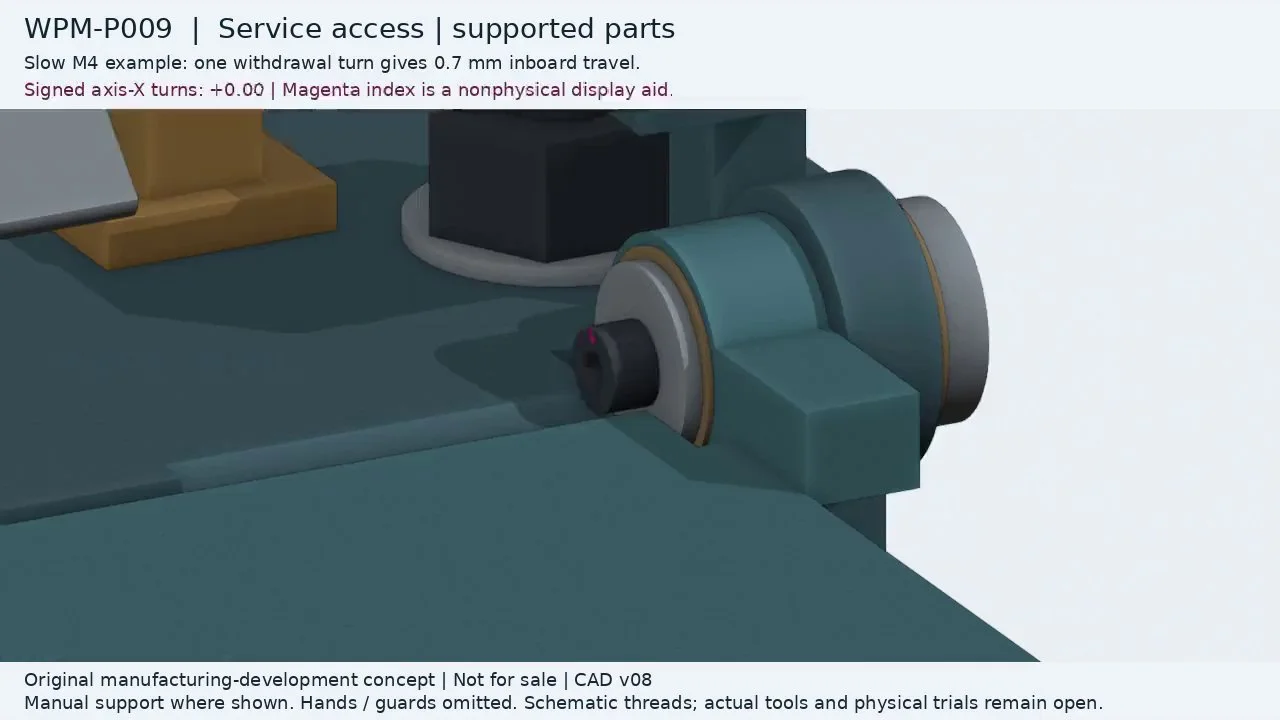
The 32-second service film illustrates supported finger and hinge relationships. Slow thread examples are pitch-coupled nominal motion. Magenta markers are nonphysical display aids; hands and actual tools are omitted. Guarded handling and safe service remain unverified.
Manufacturing development ahead
Confirm materials and forming behavior, clamp preload and slip, pin and weld stiffness, tooling wear, fits, manual support, safeguarding and handling through application-specific design review and physical trials. Schematic thread engagement remains simplified; nominal geometry checks do not establish physical clearance or performance.
WPM is a manufacturability and onshoring company, not an engineering firm. This original hypothetical study supports manufacturing discussions without establishing professional approval, commercial readiness, legal clearance or verified U.S. origin.
Study scope
34 nominal product solids. The hypothetical coupon is excluded. Fits, tooling loads, clamp slip, forming performance and safe use are unvalidated. Schematic thread engagements are simplified.
V30 identifies the review checkpoint; actual CAD revision v08. These are original hypothetical study visuals, not customer work.